Shipping products from China is not just about finding the lowest freight rate. The shipping method you choose, how your goods are packed, when suppliers complete production, and what your quotation includes can all affect your final purchasing cost.
For importers, wholesalers, distributors, and brands, the goal is straightforward: get your products delivered at a competitive total cost, on a schedule that supports your business.
Should you use sea freight or air freight? When does a full container become more economical than LCL? What is included in a DDP quotation? And how can you combine products from several Chinese suppliers into one organized shipment?
This guide helps you answer those questions, compare shipping options, and build a practical delivery plan.
Swipe horizontally to compare columns →
| Shipping Method | Best For | Main Advantage | Main Cost Consideration |
|---|---|---|---|
| International express | Samples and small urgent shipments | Convenient pickup, tracking, and delivery | Actual or volumetric weight |
| Air freight | Time-sensitive commercial inventory | Faster international transportation | Chargeable weight and destination services |
| Sea freight — LCL | Smaller wholesale orders | Shared container space | W/M charges and local handling |
| Sea freight — FCL | Larger or consolidated orders | Dedicated container and efficient bulk shipping | Total container and delivery cost |
| Rail / multimodal | Selected Europe and inland Asia routes | Additional routing options | Service availability and end-to-end cost |
Buyer tip: Compare quotations to the same final destination. A low port-to-port freight rate may cost more once destination handling, customs services, and inland delivery are included.
1. How to Choose the Right Shipping Method from China
The most effective shipping decisions begin with your purchasing requirements.
A shipment of lightweight plastic packaging and a shipment of compact metal components can have very different freight costs, even if their actual weights are similar.
Before requesting quotations, consider four questions.
How Much Cargo Are You Shipping?
Ask your supplier for:
- Total quantity and number of cartons
- Gross weight
- Carton dimensions
- Total cubic volume (CBM)
- Pallet requirements, if applicable
These details determine how much transport capacity your cargo occupies.
For ocean freight, CBM is especially important when comparing LCL and FCL. For air freight and express delivery, carton dimensions can significantly affect chargeable weight.
When Do You Need the Products?
Work backward from the date your inventory must be available.
For example, a regular wholesale replenishment order may have enough flexibility for sea freight. Products needed for a retail launch may justify a faster transport method.
You can also split the shipment: send urgent inventory by air and the remaining quantity by sea.
This can be more economical than shipping the entire order using the fastest service.
Where Will the Goods Be Delivered?
The destination makes a major difference.
Shipping to a major international port is not the same as delivering to an inland distribution center or a remote commercial address.
When comparing freight options, use the actual receiving location whenever possible.
What Type of Products Are You Importing?
Product characteristics affect transportation and packaging decisions.
Bulky, lightweight products may be expensive to ship by air. Heavy machinery may require special loading equipment. Fragile goods need suitable protective packaging, while batteries and certain other products require specific transport arrangements.
The most economical method is the one that fits the entire order—not simply the option with the lowest advertised freight rate.
2. Shipping Methods from China Explained
International Express Shipping
Express carriers such as DHL, FedEx, and UPS are commonly used for:
- Product samples and prototypes
- Small trial orders
- Urgent replacement parts
- Promotional materials
- Small quantities needed before a larger shipment arrives
Express services generally combine pickup, international transportation, tracking, and delivery.
This makes them convenient for buyers who want a relatively straightforward shipping process.
However, bulky cartons can become expensive because express charges consider both weight and package dimensions.
For commercial orders with substantial volume, compare express with standard air freight before making a decision.
Air Freight from China
Standard air freight is often suitable when delivery speed matters but the shipment is larger than a typical courier parcel.
For example, a distributor may use air freight to replenish a best-selling SKU while the main inventory shipment travels by sea.
Air freight commonly involves separate arrangements for airport handling, customs processing, and final delivery.
When comparing rates, check whether you are receiving an airport-to-airport or door-to-door quotation.
A useful strategy: Prioritize products according to how urgently they are needed.
Shipping only the time-sensitive portion by air can help maintain inventory availability while keeping most of the order on a lower-cost transport method.
Sea Freight from China
Sea freight is widely used for commercial cargo such as:
- Foodservice packaging
- Furniture and household products
- Promotional merchandise
- Industrial machinery
- Wholesale consumer goods
- Consolidated orders from multiple suppliers
Its main advantage is transportation efficiency for larger cargo volumes.
The two principal options are LCL and FCL, which we compare in the next section.
Rail and Multimodal Shipping
Rail freight can be an alternative for selected routes between China and parts of Europe and inland Asia.
Multimodal services may combine rail, trucking, and sea transport.
For suitable corridors, buyers can compare these options with conventional sea and air freight.
DHL Global Forwarding, for example, publishes China–Europe rail freight services covering both LCL and FCL arrangements.
The best comparison depends on your actual origin, destination, cargo requirements, and delivery deadline.
3. LCL vs. FCL: Which Is Better for Your Shipment?
LCL and FCL are the two main ways to arrange containerized ocean freight.
Understanding how they work helps buyers avoid paying for unnecessary container capacity or excessive handling charges.
LCL: Share Container Space
LCL stands for Less than Container Load.
Your cargo shares container space with shipments from other businesses.
Goods are collected and consolidated before departure, then separated at the destination for collection or delivery.
LCL is especially useful for smaller wholesale orders.
However, a complete LCL quotation may include ocean freight, origin warehouse handling, destination deconsolidation, terminal charges, and local delivery.
How LCL Freight Is Calculated
LCL is commonly priced using a Weight/Measure (W/M) calculation.
For a typical 1:1 ocean-freight tariff, the chargeable quantity is whichever is greater:
- Cargo volume in CBM
- Gross weight in metric tonnes
Consider two illustrative shipments:
Swipe horizontally to compare columns →
| Cargo | Volume | Gross Weight | Chargeable W/M |
|---|---|---|---|
| Lightweight packaging | 3 CBM | 450 kg | 3 revenue tons |
| Dense metal components | 1.5 CBM | 2,000 kg | 2 revenue tons |
This calculation applies to the illustrative main-freight tariff. Local charges and minimum billing quantities may use different rules.
DHL Global Forwarding explains these principles in its LCL shipping cost guide.
FCL: Use a Dedicated Container
FCL stands for Full Container Load.
Your shipment uses a dedicated container, commonly a 20-foot, 40-foot, or 40-foot high-cube container.
You do not have to fill the container completely to book FCL.
FCL can provide several practical advantages:
- Greater control over loading
- Fewer consolidation and deconsolidation steps
- More flexibility when combining products
- Potentially lower shipping cost per unit for larger orders
The best equipment choice depends on cargo volume, weight, dimensions, and loading requirements.
When Does FCL Become Cheaper Than LCL?
There is no universal CBM threshold.
The crossover depends on the shipping route, current freight rates, destination handling, and cargo characteristics.
For a small shipment occupying only a few CBM, LCL is often worth comparing first.
As volume increases, the total LCL charge may approach the price of a dedicated container.
At that point, request both quotations.
Compare the complete delivered cost—not only the ocean freight rate.
Also consider loading efficiency, handling requirements, and the expected delivery schedule.
For buyers importing many different products, combining compatible goods into one FCL shipment may improve overall transportation economics.
4. How Much Does Shipping from China Cost?
Shipping costs vary by route, transport method, cargo volume, weight, carrier capacity, season, and delivery requirements.
Rather than relying on a generic price per kilogram or container, buyers should understand how a complete shipping quotation is constructed.
The Five Main Parts of a Shipping Quote
Swipe horizontally to compare columns →
| Cost Component | Typical Charges | What Buyers Should Compare |
|---|---|---|
| China inland transport | Factory pickup, trucking, warehouse delivery | Supplier locations and pickup arrangements |
| Origin handling | Export clearance, terminal/CFS handling, documentation | Services included in the agreed trade term |
| International freight | Ocean, air, rail, or multimodal transportation | Route, carrier, schedule, cargo capacity |
| Destination handling | Terminal fees, deconsolidation, local processing | Particularly important for LCL |
| Import and final delivery | Customs brokerage, applicable duties/taxes, inland transportation | Complete cost to the receiving location |
Different providers may bundle these services differently.
For example, one quotation may cover only the ocean transportation between two ports. Another may include factory pickup and delivery to your warehouse.
These are different service packages, so they should be compared on an equivalent basis.
Freight Cost vs. Total Landed Cost
Freight cost is only one part of your total purchasing expense.
A practical landed-cost calculation includes:
Total Landed Cost = Product Cost + Sourcing and Handling Costs + Transportation + Applicable Duties and Taxes + Other Import Costs
Count charges only once, taking account of what is already included in your supplier's selling price and the agreed trade term.
For a wholesaler purchasing 10,000 units, the calculation becomes even more useful when converted into a per-unit figure:
Landed Cost per Unit = Total Applicable Landed Cost ÷ Number of Units
This helps buyers evaluate product margins and compare purchasing alternatives.
When several products share one shipment, allocate freight and handling costs using an appropriate, consistent basis.
Why Carton Size Matters for Air Freight
Air freight and international express often use chargeable weight.
This means that freight charges may be calculated using the greater of actual weight and volumetric weight.
Consider an illustrative carton:
Swipe horizontally to compare columns →
| Measurement | Value |
|---|---|
| Carton dimensions | 120 × 80 × 50 cm |
| Actual gross weight | 40 kg |
| Cargo volume | 0.48 CBM |
| Air volumetric weight (÷ 6,000) | 80 kg |
| Express volumetric weight (÷ 5,000) | 96 kg |
The formulas are:
Standard air freight example:
120 × 80 × 50 ÷ 6,000 = 80 kg
DHL Express example:
120 × 80 × 50 ÷ 5,000 = 96 kg
In both examples, the carton occupies more chargeable space than its physical weight suggests.
These are calculation examples, not freight quotations. Actual chargeable weight is determined under the selected carrier's rules.
Sources: DHL Global Forwarding — Chargeable Weight and DHL Express — Weight and Dimensions.
How to Reduce Shipping Costs Before Production Finishes
One of the most practical cost-saving opportunities is better packaging.
Ask your supplier to review:
- Units per carton
- Carton dimensions and unused space
- Protective packaging
- Carton stackability
- Pallet configuration
- Container-loading efficiency
For lightweight products such as plastic packaging, promotional gifts, and empty containers, reducing unnecessary carton volume can make a meaningful difference.
The objective is efficient packing that protects the goods while making better use of transportation space.
Shipping optimization starts with product and packaging decisions—not only with freight negotiations.
5. How Long Does Shipping from China Take?
Shipping time depends on the selected transport method, origin, destination, carrier schedule, and local processing requirements.
Express services are generally the fastest option for small urgent parcels. Standard air freight is usually faster than ocean freight. Sea freight offers greater transport efficiency when buyers can plan around a longer delivery period.
But there is an important distinction:
Port-to-port transit time is not the same as the time required to receive your goods at your warehouse.
Understand the Complete Delivery Timeline
A typical commercial shipment follows this sequence:
Factory Ready → Pickup → Export Processing → International Transport → Destination Processing → Customs Clearance → Final Delivery
A freight quotation may describe only one section of that process.
For example, Freightos' 2026 China–US transit-time reference illustrates how ocean freight planning estimates differ between port-to-port and door-to-door services.
This is one route-specific reference, not a global delivery schedule.
When comparing shipment estimates, request the same origin, destination, service type, and cargo-ready date.
Why Delivery Times Change
International shipping schedules can be affected by:
- Vessel or flight schedule adjustments
- Port congestion
- Transshipment connections
- Weather and route disruptions
- Customs examinations
- Documentation processing
- Final-mile delivery arrangements
The UNCTAD Review of Maritime Transport 2025 documents the effect of route disruptions and freight market volatility on global shipping.
For buyers, planning around the complete delivery process is more useful than relying on a single advertised transit-time figure.
Plan Backward from Your Warehouse Deadline
Start with the date your goods must arrive.
Then establish:
- Target warehouse receiving date
- Expected destination clearance and local delivery period
- Main freight schedule and booking cutoff
- China pickup and export-processing period
- Supplier cargo-ready date
- Inspection and final packing schedule
This creates a coordinated timeline connecting production and shipping.
If your order includes products with different deadlines, compare consolidated shipping with a split-shipment plan.
6. EXW, FCA, FOB, DAP and DDP: Which Trade Term Should You Choose?
Shipping terms determine how goods are handed over, how transportation is arranged, and which costs are included in the transaction.
The most widely used terms are defined under the International Chamber of Commerce's Incoterms® 2020 rules.
Common Shipping Terms for China Imports
Swipe horizontally to compare columns →
| Term | Practical Meaning | Suitable Buying Situation |
|---|---|---|
| EXW — Ex Works | Goods are made available at the agreed seller's location | Buyers organizing China-side collection and export arrangements |
| FCA — Free Carrier | Seller delivers to the carrier at the named point and handles export clearance | Containerized and multimodal shipments |
| FOB — Free On Board | Seller delivers goods on board the vessel at the named port | Sea freight transactions with onboard delivery |
| DAP — Delivered at Place | Seller arranges transportation to the named destination; buyer handles import clearance and duties | Buyers who want destination delivery while managing import formalities |
| DDP — Delivered Duty Paid | Seller arranges destination delivery and import clearance, including applicable duties and taxes | Buyers seeking a comprehensive destination-delivery arrangement |
Always state the named place and applicable Incoterms® edition.
EXW vs. FCA
Under EXW, the buyer organizes collection and the subsequent transportation arrangements.
Under FCA, the seller delivers goods to the agreed carrier or location and completes export clearance.
For overseas buyers arranging freight through a forwarder, FCA can simplify the China export handover.
FOB vs. FCA for Container Shipping
FOB is common in quotations from Chinese suppliers.
However, under Incoterms® 2020, FOB applies to sea or inland waterway transport involving delivery on board the vessel.
For containerized cargo handed over at a terminal before loading, FCA often better matches the physical delivery process.
The ICC explains this distinction in its official FOB guidance.
When Is DDP Shipping a Good Choice?
DDP can be attractive when buyers want a more comprehensive destination-delivery quotation.
For suitable products and destinations, an agreed DDP arrangement can combine transport and import-related costs into a clearer purchasing budget.
To request a meaningful DDP quotation, provide your product description, declared shipment value, quantities, cargo dimensions, destination address, and expected shipment date.
Import arrangements and documentation should be matched to the destination market before finalizing the quotation.
KSH can help buyers review suitable shipping arrangements, coordinate freight quotations, and explore project-qualified DDP options.
For buyers who already manage their own import clearance, DAP or another arrangement may be more appropriate.
See the ICC Incoterms® 2020 rules for the complete definitions.
7. Shipping Products from Multiple Chinese Suppliers
When you buy from several factories, the biggest opportunity to improve shipping efficiency may come before the goods leave China.
Different suppliers have different production schedules, packing standards, and delivery locations.
Without a coordinated plan, buyers may end up managing several independent shipments.
Example: Three Suppliers, One Import Order
Imagine a distributor placing these orders:
Swipe horizontally to compare columns →
| Supplier | Products | Cargo Volume | Ready Date |
|---|---|---|---|
| Factory A | Foodservice packaging | 9 CBM | Week 1 |
| Factory B | Promotional gifts | 6 CBM | Week 2 |
| Factory C | Display materials | 2 CBM | Week 5 |
| Total | Three categories | 17 CBM | Different dates |
Illustrative procurement example; not a real customer order or live quotation.
The buyer has three practical options.
Option 1: Combine all 17 CBM.
Wait until every supplier finishes production, consolidate the goods, and compare LCL with FCL quotations for the combined volume.
This may improve consolidation efficiency, but earlier products must wait for Factory C.
Option 2: Dispatch the first 15 CBM earlier.
Combine the goods from Factories A and B, then ship Factory C's products separately.
This may improve inventory availability. Compare the cost of two shipments with the cost of waiting for one consolidated shipment.
Option 3: Expedite only urgent products.
If a small quantity is urgently required, consider air freight for that portion and sea freight for the remainder.
The best solution depends on the delivery deadline, freight quotations, and the value of having inventory available earlier.
The lesson: Plan transportation around both cargo volume and supplier completion dates.
How KSH Helps Coordinate the Process
KSH Sourcing helps overseas buyers organize the purchasing work that happens before international shipment.
This can include:
Supplier Coordination — Following up on orders, expected completion dates, and China-side delivery arrangements.
Inspection and Packing Records — Coordinating agreed product checks, photographs, carton details, and packing information.
Cargo Consolidation — Bringing compatible goods together and organizing cartons for shipment.
Shipping Preparation — Coordinating loading requirements and freight handover, including work with the buyer's nominated forwarder or arranging suitable logistics options.
For buyers managing several factories, this creates a more organized path from separate purchase orders to shipment-ready cargo.
Real Project: Multi-Category Procurement for the Maldives
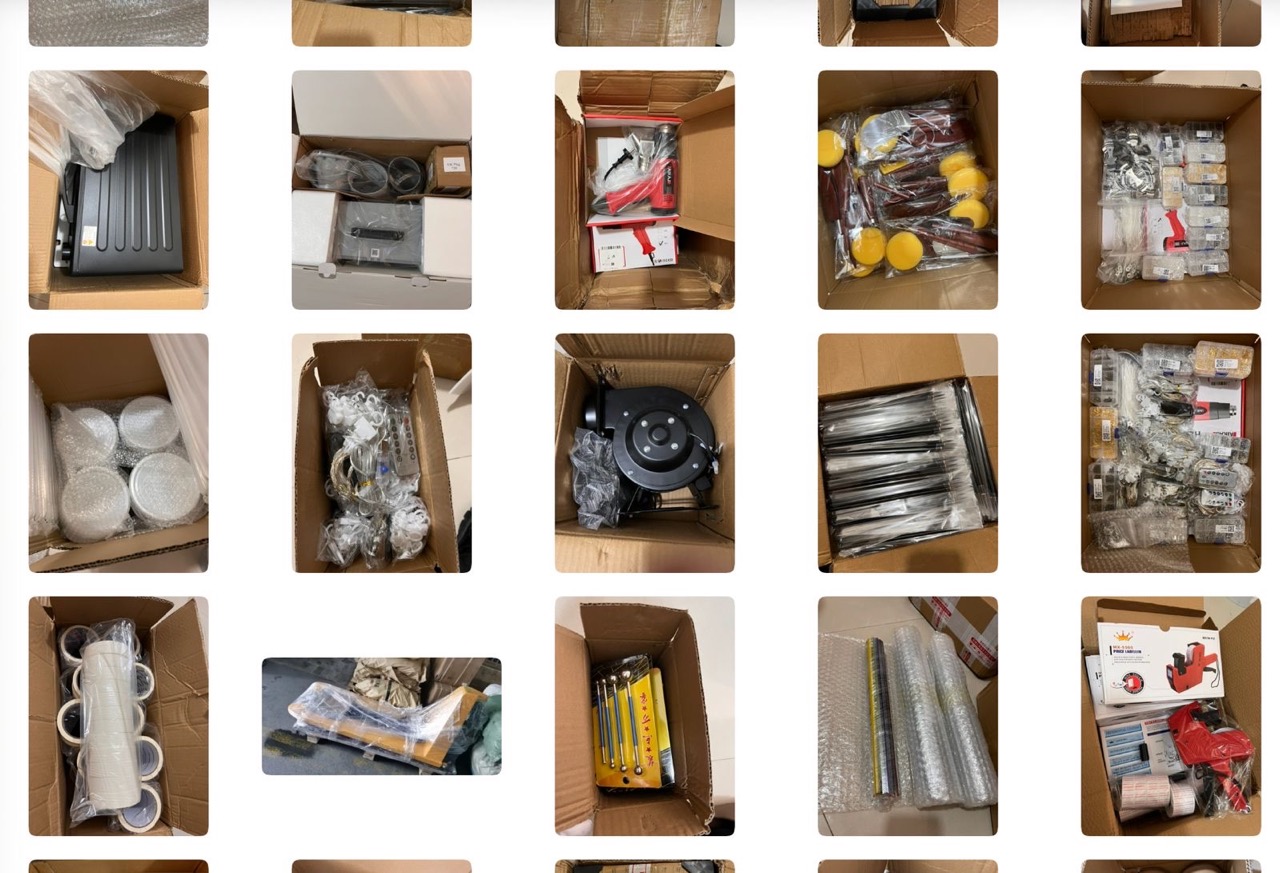
In a documented KSH procurement project for a Maldives-based commercial buyer, several product categories were sourced and coordinated together:
- Catering supplies
- Food and beverage packaging
- Welding equipment
- Pottery-studio supplies and equipment
KSH coordinated suppliers, quotations, purchase orders, and local deliveries.
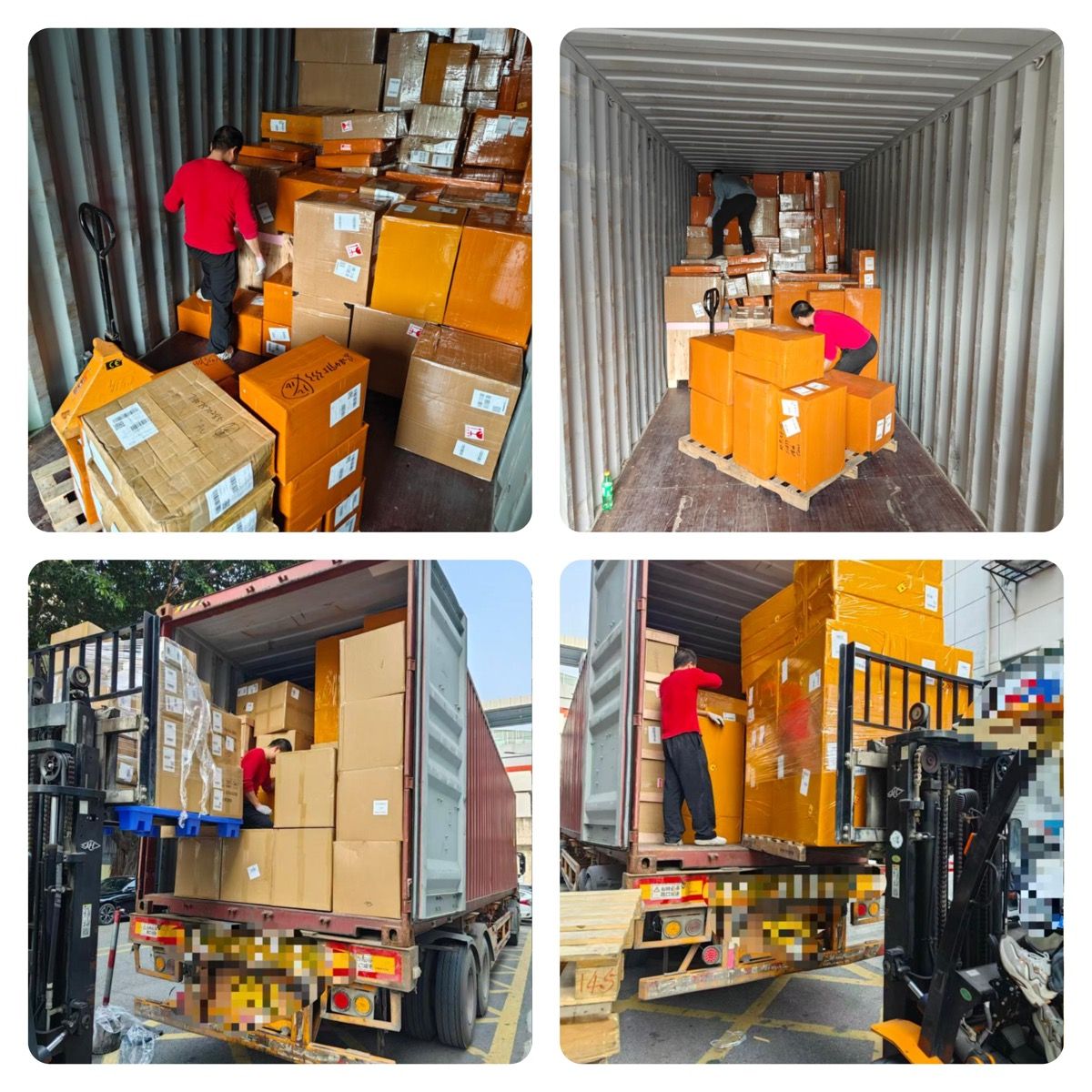
The team also organized hands-on product checking, photo documentation, sorting, repacking where needed, and consolidated container-loading preparation.
The international ocean shipment was handled by the buyer's nominated freight forwarder, with KSH coordinating the China-side loading and handover.
This demonstrates the operational value of connecting supplier management with shipment preparation.
See the KSH Maldives Procurement Case Study
For a more detailed explanation of the process, read How to Consolidate Orders from Multiple Suppliers in China.
Buying from Several Factories in China?
KSH can help coordinate supplier orders, inspection arrangements, consolidation, and shipping preparation—turning separate factory purchases into a more manageable procurement project.
Explore KSH's China Procurement Workflow
8. How to Compare Shipping Quotes and Prepare Your Shipment
A well-prepared freight request makes quotations easier to compare and helps avoid unnecessary delays.
What Should a Complete Shipping Quote Show?
Before selecting an arrangement, compare these details:
- Origin: Factory address, consolidation warehouse, or departure port
- Destination: Arrival port or complete delivery address
- Cargo: Product type, number of cartons, gross weight, and CBM
- Transport: Express, air, LCL, FCL, rail, or multimodal
- Origin charges: Pickup, export handling, documentation
- Main freight: Transportation charges and applicable surcharges
- Destination charges: Terminal handling, customs-related services, local delivery
- Commercial terms: Incoterms®, payment conditions, quote validity
- Delivery schedule: Expected main transport and final delivery milestones
- Additional services: Cargo insurance, inspection, storage, special handling
When quotations include different services, bring them to an equivalent delivery basis before comparing the total price.
Five Common Shipping Mistakes to Avoid
1. Comparing only ocean freight rates.
Include origin handling, destination charges, and final delivery in the cost comparison.
2. Booking with inaccurate carton measurements.
Use final packed dimensions and gross weights when confirming freight.
3. Confusing port arrival with warehouse delivery.
Plan around the complete delivery process.
4. Planning consolidation too late.
Coordinate supplier schedules before the first factory finishes production.
5. Overlooking product-specific transport requirements.
Identify batteries, liquids, machinery, fragile items, and other relevant cargo characteristics when requesting the quotation.
These simple steps can make shipping decisions clearer and reduce unnecessary coordination work.
Information to Send When Requesting a Shipping Quote
You can use the following checklist for your next shipment:
- Product descriptions and intended use
- Quantities and number of SKUs
- Carton counts, dimensions, and gross weights
- Total CBM
- Supplier or pickup locations
- Destination country, city, and receiving address
- Estimated cargo-ready date
- Preferred delivery date
- Preferred transport method, if any
- Requested trade term
- Inspection, consolidation, insurance, or special delivery requirements
If your final packing details are not available yet, start with reasonable estimates and update the quotation when production details are confirmed.
For Amazon sellers, additional labeling, carton, delivery appointment, and warehouse requirements may apply. These are best addressed in a dedicated Amazon FBA shipping plan.
9. Frequently Asked Questions
What is the cheapest way to ship products from China?
Sea freight is often the most economical choice for larger, non-urgent commercial shipments. LCL is useful for smaller cargo volumes, while FCL may offer better value for larger shipments. Compare the complete delivered cost, including local handling and inland delivery.
Is it better to ship by air or sea from China?
Air freight is better suited to urgent inventory and time-sensitive orders. Sea freight generally offers better transportation efficiency for bulky or larger shipments. Buyers can also combine both methods by shipping urgent quantities by air and the remaining inventory by sea.
When should I choose FCL instead of LCL?
Compare FCL with LCL when your cargo volume becomes substantial enough that the total LCL cost approaches a dedicated-container quotation. There is no universal CBM threshold because route pricing, destination handling, cargo characteristics, and delivery requirements all affect the result.
Can I ship products from multiple Chinese suppliers together?
Yes. Compatible goods from several factories can be collected at a consolidation point in China, checked, organized, and prepared for combined shipment. Planning production dates and packing information early makes consolidation more efficient.
Can I arrange door-to-door shipping from China?
Yes. Door-to-door services can be arranged on many international routes. The exact quotation depends on the pickup location, destination, products, and agreed service. DAP and DDP are common Incoterms® options for destination-delivery arrangements.
10. Make Your China Purchasing and Shipping Work Together
The best shipping plan begins before your goods are ready to leave the factory.
By choosing transportation based on cargo volume, delivery deadlines, and total landed cost, you can make more informed purchasing decisions.
And when your products come from several Chinese suppliers, coordinated purchasing and consolidation can make the entire shipment easier to manage.
Your China Sourcing & Shipping Partner
KSH Sourcing helps international importers, wholesalers, distributors, and brands coordinate purchasing from China.
Whether you need new manufacturers or already work with Chinese suppliers, we can help with supplier sourcing, order follow-up, inspection arrangements, multi-supplier consolidation, and logistics coordination.
Planning your next shipment from China?
Send us your product list, approximate quantities, supplier locations, destination, and preferred delivery date.
We'll review your purchasing and shipment requirements and help you identify a practical way forward.
Discuss Your Sourcing & Shipping Project with KSH